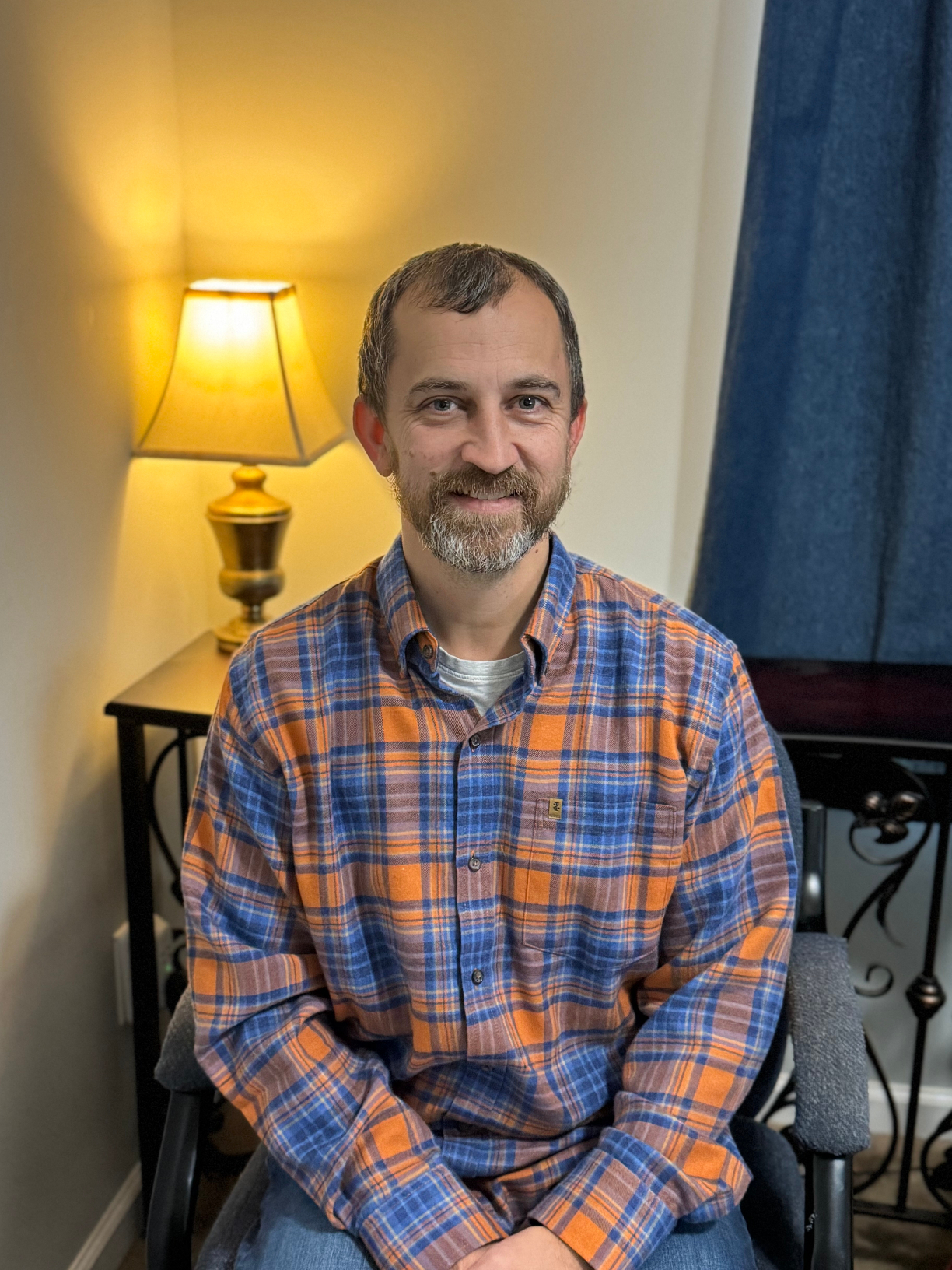
Matt Burch, LPC
Licensed Professional Counselor in Georgia. Trained in family systems and cognitive behavioral therapy. Now practicing primarily from a Wilder Method perspective, helping capable adults restore access to the instinctual part of themselves.
Training & Practice
M.A. in Counseling, Gordon-Conwell Theological Seminary, 2005.
Twelve years at Eagle Ranch in Georgia working with families, children, groups, and individuals. Three years in private practice. Trained in family systems and cognitive behavioral theory and practice.
Today I work primarily from a Wilder Method perspective, which focuses on restoring access to the instinctual part of the self, the part that knows what it wants, what it doesn't, and what to do next.

"Looking back, a lot of my story makes more sense now through the lens of instinctual drive."
The story underneath the bio.
I grew up as a fraternal twin, and my brother was always bigger, louder, and naturally more forceful than I was. Without realizing it, I adapted by becoming more passive and accommodating. I learned early to defer, go along, and rely more on the direction or strength of others than my own.
Over time, being accommodating stopped feeling like something I did and started feeling like who I was.
The easy one.
The one who adjusted.
The one who gave in.
The one who kept the peace.
I got very used to adapting to what other people wanted, but much less connected to what I actually wanted.
Looking back, I think I was often rewarded for suppressing those parts of myself, and watched my brother get punished for expressing them. So choosing what other people preferred felt safer and more natural than expressing my own preferences, pushing back, or taking up space.
Somewhere along the way, I also became intensely self-conscious and overly aware of how I was coming across. At the time, I didn't think of any of this in terms of instinctual drive. I just thought this was my personality.
I eventually went to school to become a counselor and spent the next 15 years working with families, couples, and individuals navigating many different types of struggles. During those years, I saw real growth, healing, and meaningful change happen, which is why I still believe deeply in the value of therapy and relational work today.
But personally, the way I was wired, constantly overriding myself, staying overly accommodating, and disconnected from my own internal drive (Id), took its toll on me and eventually led to significant burnout.
I stepped away from counseling for six or seven years and moved into other work, including real estate. Looking back, I really needed that season. It became an important mental and emotional reset.
Over the past year, learning about instinctual drive and the Wilder Method has completely changed the way I understand anxiety and many of the patterns underneath it. One of the biggest realizations for me was seeing just how quiet, almost dormant, my own Id was.
Even simple questions like, “What do I actually want?” were surprisingly difficult to answer.
And while that realization was difficult, it was also incredibly freeing. For the first time, I felt like I had permission to reconnect with parts of myself I had spent years suppressing, the parts connected to instinct, desire, honesty, boundaries, directness, and movement.
As I started reconnecting with those parts of myself, it organically improved many of the symptoms I had struggled with for years, including anxiety.
"I will protect you."
Almost immediately, my body relaxed.
I remember one moment in particular where I was dealing with intense fear and nervousness, and nothing seemed to help, until I finally stopped overriding myself and internally said, “I will protect you.”
Almost immediately, my body relaxed.
That moment stayed with me. It helped me realize how disconnected I had become from parts of myself that were meant to protect me, speak up, act, and move forward.
Over time, as I have continued rebuilding trust in those parts of myself instead of suppressing or shaming them, the anxiety has gradually lessened.
That is a major reason why I feel so passionate about this work today.
I care deeply about helping people reconnect with these parts of themselves, not through more shame or endless analysis, but through greater self-understanding, honest action, self-trust, and learning how to stop overriding themselves in the moments that matter most. I'm also passionate about helping other therapists avoid burnout.
Curious whether we'd be a good fit?
Take the free assessment, or reach out for a brief consultation. No pressure either way.